The if-you-know test
Kraymer Journal
The reference should be clear enough for a fan and quiet enough to let the wearer choose when to explain it.
There is a particular kind of compliment that only fandom objects can earn.
Someone looks at what you are wearing, pauses, and asks a half-finished question. They already know the answer. They just want to know whether you know too.
That moment is my favourite test for subtle anime jewelry.
The first reading
At first glance, the piece has to work without a reference guide.
The shape should feel balanced. The stones and colors should make sense together. It should look considered beside the rest of an outfit, even to someone who has never met the character behind it.
This first reading matters because the wearer spends most of the day among people who will not understand every reference. The jewelry still has to belong there.
The second reading
A fan sees a second layer in the color combination, a familiar silhouette, the way two pieces meet, or a small detail that looked decorative a second ago. The object changes after recognition. Nothing physical moved, but the meaning did.
That second reading is where fandom design earns its place. The character is present without being printed on top.

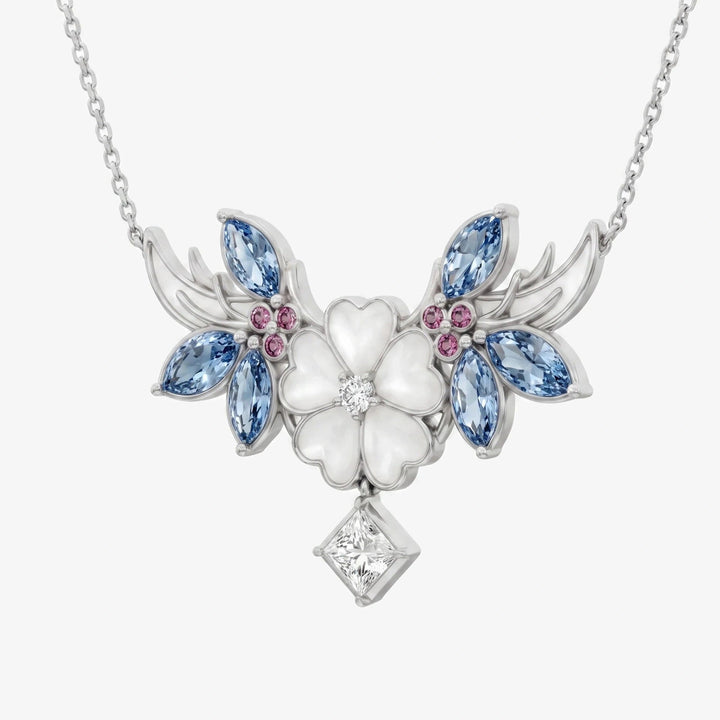
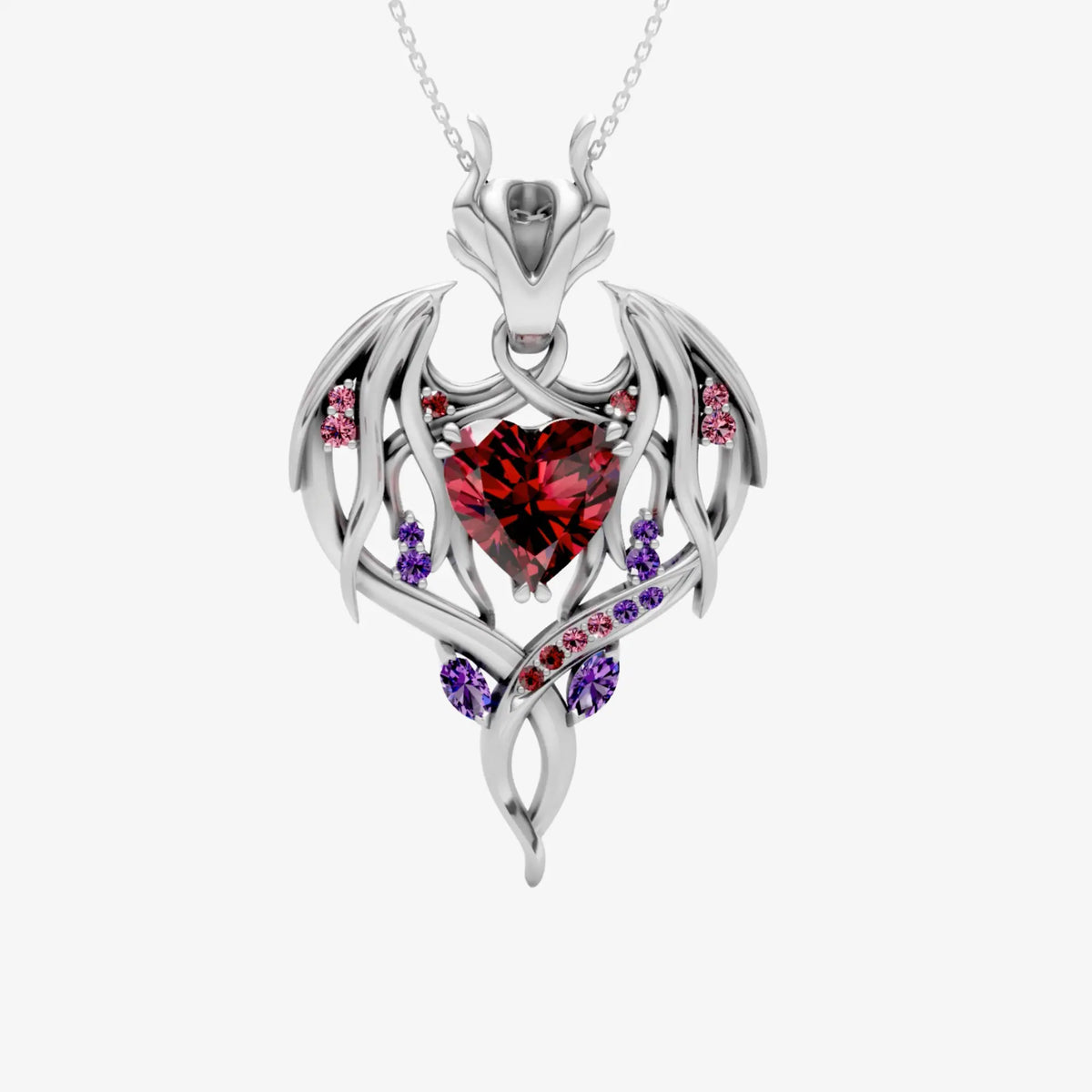
The Durin Necklace is a useful example of the test. Cover the product name and the non-fan still sees a red heart-cut stone held inside a silver dragon-wing setting, with pink and purple stones around it. Reveal the name and a fan can judge whether those choices add up to the character they know. The title confirms the reading; it should not create it from nothing.
Too quiet is still a failure
Subtle design can become so cautious that the reference disappears.
If every clue is reduced, recolored, or made generic, the fan has nothing to discover. The product may still be attractive, but the character name is now doing more work than the object.
I try to keep at least one honest anchor. It does not need to shout. It needs to survive.
The best anchor depends on the idea. A relationship may need two complementary forms. A character known for one strong symbol may need only that. A piece built around a mechanism has to let the mechanism carry meaning instead of treating it as a trick.
Let the wearer decide
The if-you-know test is useful because it leaves control with the person wearing the piece.
They can explain it. They can keep the reference private. They can enjoy the brief connection with another fan and move on. The design does not force one response.
That flexibility is what makes a fandom piece easier to wear outside the moment it was bought for. It can join ordinary clothes and ordinary days without losing the story that made it matter.
Browse the jewelry collection and look for the detail you would recognize first.
Wear the story